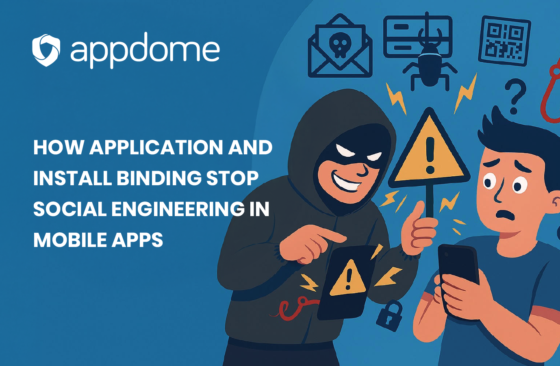
How App & Install Binding Stop Social Engineering in Mobile Apps
How App and Install Binding can be used to prevent common identity-based social engineering attacks | Appdome AI-Native Mobile App Defense
The Appdome Dev+Sec blog is your source for expert insights on protecting your mobile business. We break down the most pressing issues facing mobile businesses including: AI-powered fraud, and API abuse and bot attacks, device binding, security and compliance, and threat telemetry and devops and compliance issues.
Whether you’re a CISO, product owner, app developer, or mobile security leader, this blog is built to empower your team with the knowledge to stay ahead of threats—and the tools to act instantly.
Protect your mobile business. Defend what matters. Evolve faster than attackers.


How App and Install Binding can be used to prevent common identity-based social engineering attacks | Appdome AI-Native Mobile App Defense

Mobile Ad Fraud Is a Multi-Billion Dollar Problem
Mobile ad fraud drains marketing budgets and corrupts attribution signals..

We’ve all seen it. That quiet, almost magical moment when your phone lights up with a message from Apple or Google…

IDAnchor™ stops mule accounts in mobile apps by binding each user to a trusted app, install, and device—preventing fake account creation at the source.

Learn how to improve identity verification workflows in mobile apps using persistent mobile identity from Appdome.

IDAnchor™ brings continuous identity trust to mobile apps, protecting CIAM from fake apps, spoofed devices, and session-based fraud with a persistent chain of trust.

In this blog, we’ll explore how Appdome’s new IDAnchor™ offering is the foundation of trusted Customer Identity for mobile applications everywhere.

In earlier posts, we defined Customer Identity Protection (CIP) and shared why IDAnchor™ is the foundation of Trusted Customer Identity in mobile apps. Now, let’s turn to the need…

Customer Identity Protection (CIP) is a perimeter defense layer for Customer Identity and Access Management (CIAM), Identity Verification (IDV), and other systems used in mobile applications. CIP establishes a chain of trust from the publisher to the mobile app instance, device, and end user and monitors the mobile environment for threats that undermine customer identity in apps.

Summary: Quantum computing poses a looming challenge to today’s encryption standards, especially for mobile apps that rely on asymmetric key exchange to secure user data. Threat actors can potentially…

Barclays says that credential stuffing remains a major mobile banking risk in 2022. Here are 5 easy steps mobile developers and security professionals can take to prevent a mobile credential stuffing attack in banking apps.

Banking Trojans are no longer just malware—they’re the engine behind today’s most dangerous, AI-driven mobile fraud campaigns. In 2025, mobile Trojans are responsible for more account takeovers, financial losses,…
Have a Security Project?
We Can Help!