Introduction
On October 21, 2026, critical vulnerabilities discovered by Wiz Research in the core PHP engine sent shockwaves through the cybersecurity industry. PHP powers approximately 70% of the world’s websites, including major platforms such as WordPress, Drupal, Joomla, and Wikipedia’s MediaWiki.
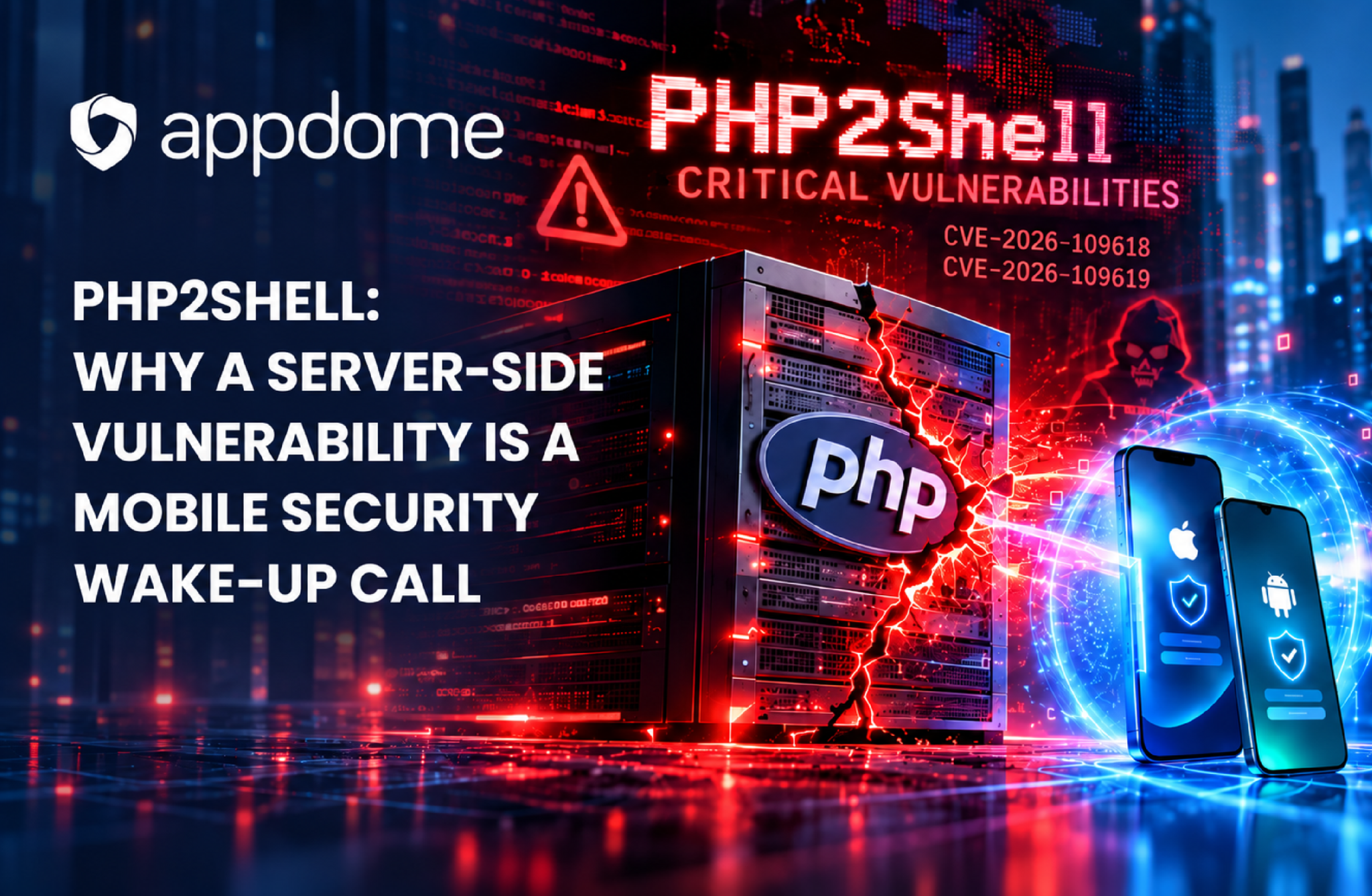
Dubbed PHP2Shell, the vulnerabilities include memory disclosure and unauthenticated remote code execution (RCE), potentially allowing attackers to take control of affected servers, steal sensitive data, and compromise websites. Critically, these vulnerabilities exist in PHP itself, independent of the applications running on top of it. Every PHP version released over the past decade is affected by at least one of the vulnerabilities, prompting the release of emergency security patches on October 21.
The discovery also marks a significant milestone in AI-assisted cybersecurity research. Although the underlying flaws had existed for decades, exploiting them required exceptionally complex techniques. Frontier AI models helped researchers overcome those barriers, demonstrating how AI can dramatically accelerate the discovery and weaponization of longstanding software vulnerabilities.
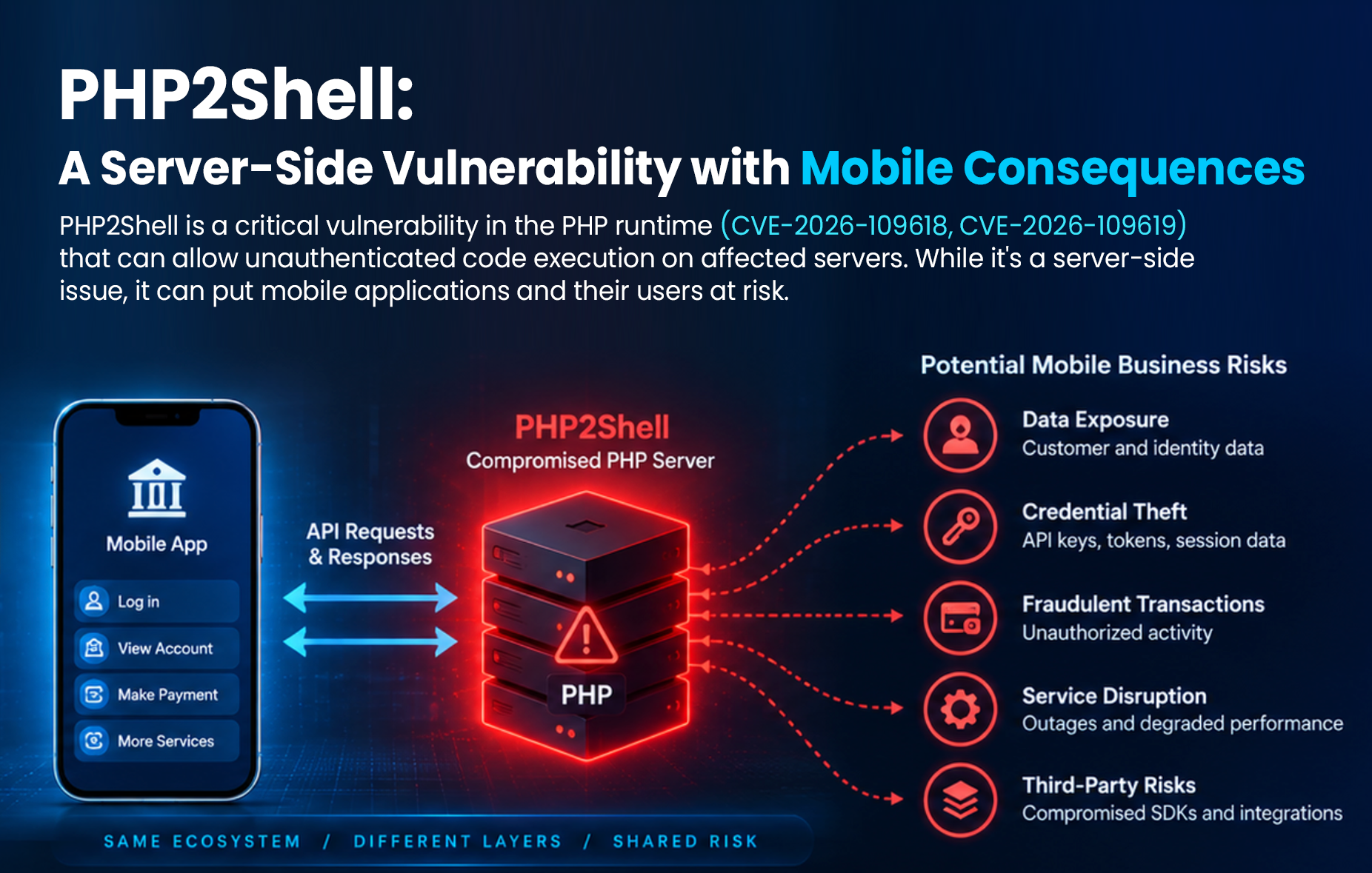
While PHP2Shell is fundamentally a server-side threat, its implications extend far beyond websites and web servers. Modern mobile applications depend on interconnected backend services, APIs, authentication infrastructure, and third-party integrations, many of which may rely on PHP. A successful backend compromise can expose sensitive information, undermine trusted application workflows, and create new opportunities for mobile fraud and abuse, even when the mobile application itself contains no vulnerability.
PHP2Shell reinforces a critical reality: the mobile attack surface extends far beyond the device, and protecting the mobile business requires defenses that account for threats originating throughout the connected ecosystem.
The disclosure of PHP2Shell, two critical vulnerabilities in the PHP runtime, is another reminder that the mobile attack surface extends far beyond the application running on a user’s device.
Disclosed in October 2026, CVE-2026-109618 and CVE-2026-109619 were assigned critical severity ratings. Under certain conditions, they may permit unauthenticated remote code execution on affected PHP servers. Researchers have reported early exploitation activity, although scanning and proof-of-concept demonstrations do not necessarily establish widespread successful compromise according to CrowdStrike analysis.
For mobile businesses, the implications extend beyond traditional web application security. Modern Android and iOS applications rely on interconnected backend services, APIs, authentication infrastructure, and third-party integrations. When one of these components is compromised, the consequences can reach the mobile experience even if the app itself contains no vulnerability.
The Mobile Attack Surface Doesn’t End at the Device
Consider a mobile banking app that communicates with a PHP-powered backend to authenticate users, retrieve balances, or process transactions. If an attacker compromises that backend, sensitive information, application credentials, and critical services may be exposed. Depending on the compromise, attackers could manipulate API responses, disrupt operations, or use stolen credentials in subsequent attacks. None of these outcomes requires exploiting the mobile app itself.
Third-party services and SDK-connected infrastructure can create similar dependencies. Research by security firm NowSecure research reported that 8.5% of apps in one assessment sample contacted at least one PHP server reporting a potentially vulnerable version. That is not an industry-wide prevalence estimate or proof of exploitability, but it highlights a visibility problem: mobile teams may not know every backend their apps depend on.
PHP2Shell mobile app security therefore begins with understanding relationships among applications, APIs, identities, infrastructure, and external services—not treating the app binary as the entire attack surface.
From Backend Compromise to Mobile Business Risk
A compromised backend can open the door to downstream abuse. Attackers with exposed API credentials or knowledge of application workflows may try to impersonate legitimate clients, automate fraudulent transactions, manipulate business processes, or misuse authenticated sessions. These are plausible secondary scenarios, not documented outcomes of every PHP2Shell attack.
Patching affected PHP infrastructure is the essential direct remediation. No mobile runtime protection can patch a vulnerable server or guarantee that an unauthenticated server-side exploit is blocked. But patching alone does not eliminate subsequent risk involving stolen credentials, malicious automation, application tampering, or abuse of legitimate mobile workflows.
Where Appdome Differentiates: Protecting the Mobile Business
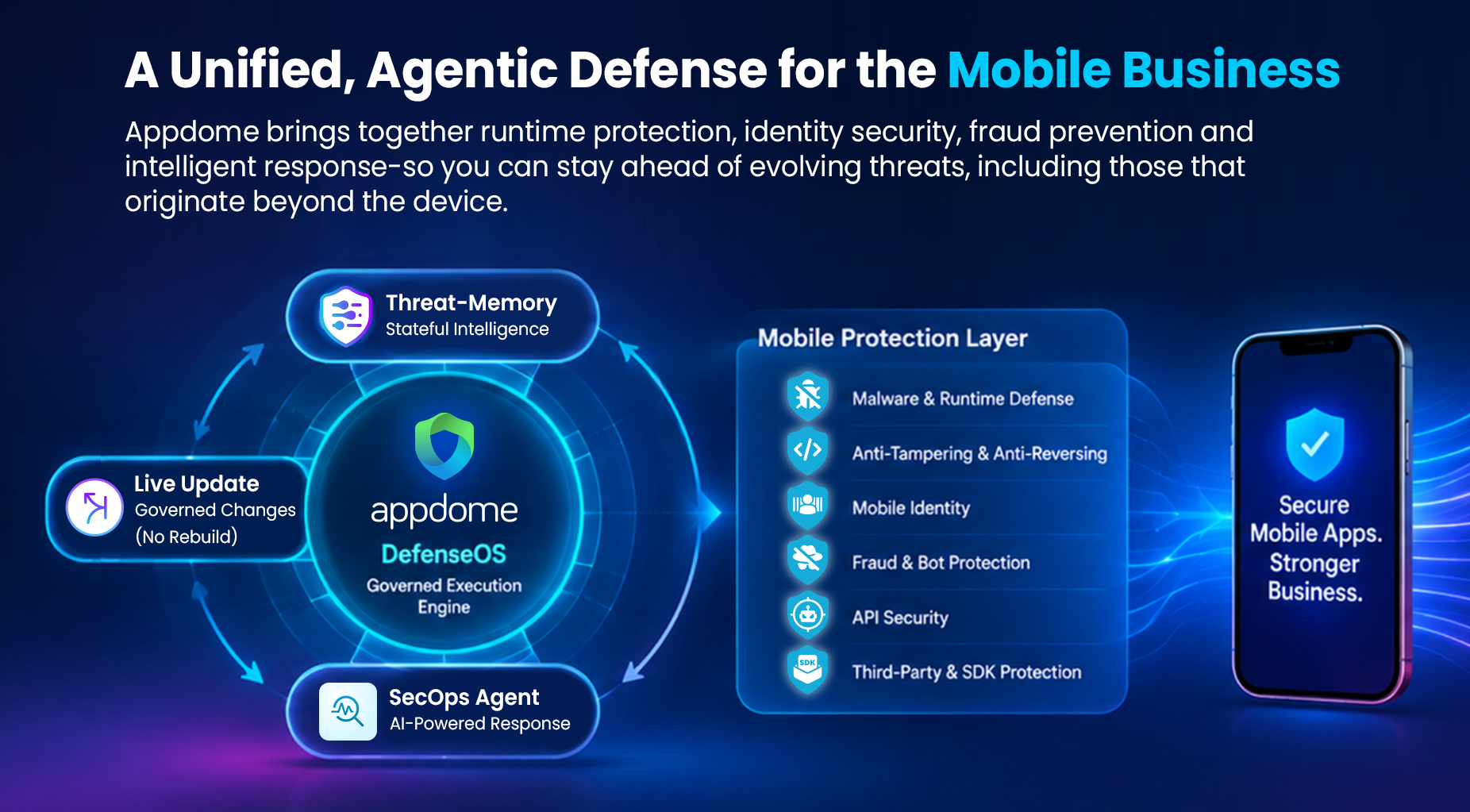
Appdome embeds mobile security, anti-fraud, anti-bot, identity, and API protection capabilities into Android and iOS apps without requiring developers to write security code or integrate SDKs. Its relevance to PHP2Shell is not as a PHP patch, but as a complementary defense against mobile-side and client-to-API attack techniques that can emerge alongside a backend incident.
Runtime anti-tampering and anti-reversing protections can make it harder to manipulate apps or extract knowledge used to imitate legitimate clients. Mobile identity, credential protections, and mobile bot defense can help reduce selected forms of automated abuse and fraudulent app-to-backend interactions. Their effectiveness depends on the attack path, deployment, and configuration; they do not make a compromised backend trustworthy.
The differentiation extends beyond individual controls. Appdome DefenseOS provides a governed execution foundation for coordinated protections inside the app. Threat-Memory introduces stateful threat intelligence that connects patterns across events instead of treating each signal as isolated. The SecOps Agent uses agentic analysis to help security teams interpret mobile fraud and cyber threats, prioritize action, and understand their defense posture.
From Static Protection to Adaptive, Governed Defense
PHP2Shell underscores a familiar operational challenge: defenders must discover exposure, patch infrastructure, investigate possible compromise, and reassess adjacent risks while threat information changes rapidly. Fragmented tools and app release cycles can slow the response.
Appdome’s Live Update capability addresses a distinct part of that problem: governed changes to mobile defenses and policies without a conventional app rebuild or store release, subject to the product’s supported workflows and approvals. Combined with DefenseOS, Threat-Memory, and the SecOps Agent, it points toward a more connected, agentic mobile defense model. That is a direction of travel—not a claim that all response decisions are already fully autonomous.
What Mobile Security Teams Should Do Now
Inventory first-party and third-party PHP services used by mobile apps. Verify affected versions and patch promptly. Review logs and indicators for exploitation, then assess possible exposure of tokens, credentials, and sensitive data. In parallel, test protections against reverse engineering, tampering, impersonated mobile clients, automated API abuse, and fraudulent workflows. Finally, evaluate how quickly new intelligence can translate into reviewed, effective mobile protection changes.
PHP2Shell is a server-side vulnerability. Its broader lesson is that the mobile business depends on systems far beyond the device. Attackers do not respect architectural boundaries; a resilient mobile security strategy cannot stop at them either.
Protect the Mobile Business Beyond the Backend
PHP2Shell demonstrates why mobile security cannot end at the app or the server. Patching vulnerable infrastructure is essential, but organizations also need to protect mobile identities, application integrity, API interactions, and business workflows against downstream abuse.
Appdome brings these defenses together through an integrated, increasingly agentic approach to mobile security, helping organizations strengthen protection, respond faster to emerging threats, and build a more resilient mobile business.
Request a demo to see how Appdome can help protect your mobile applications, users, and business against evolving cyber threats.