





























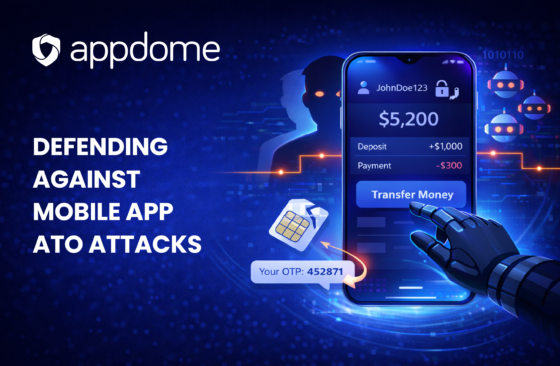
Defending Against Mobile App Account Takeovers (ATO) in 2026
Learn how to stop mobile app account takeovers in 2026. Block credential stuffing, mobile bots, emulators, and malware with persistent identity and real-time, in-app defenses.

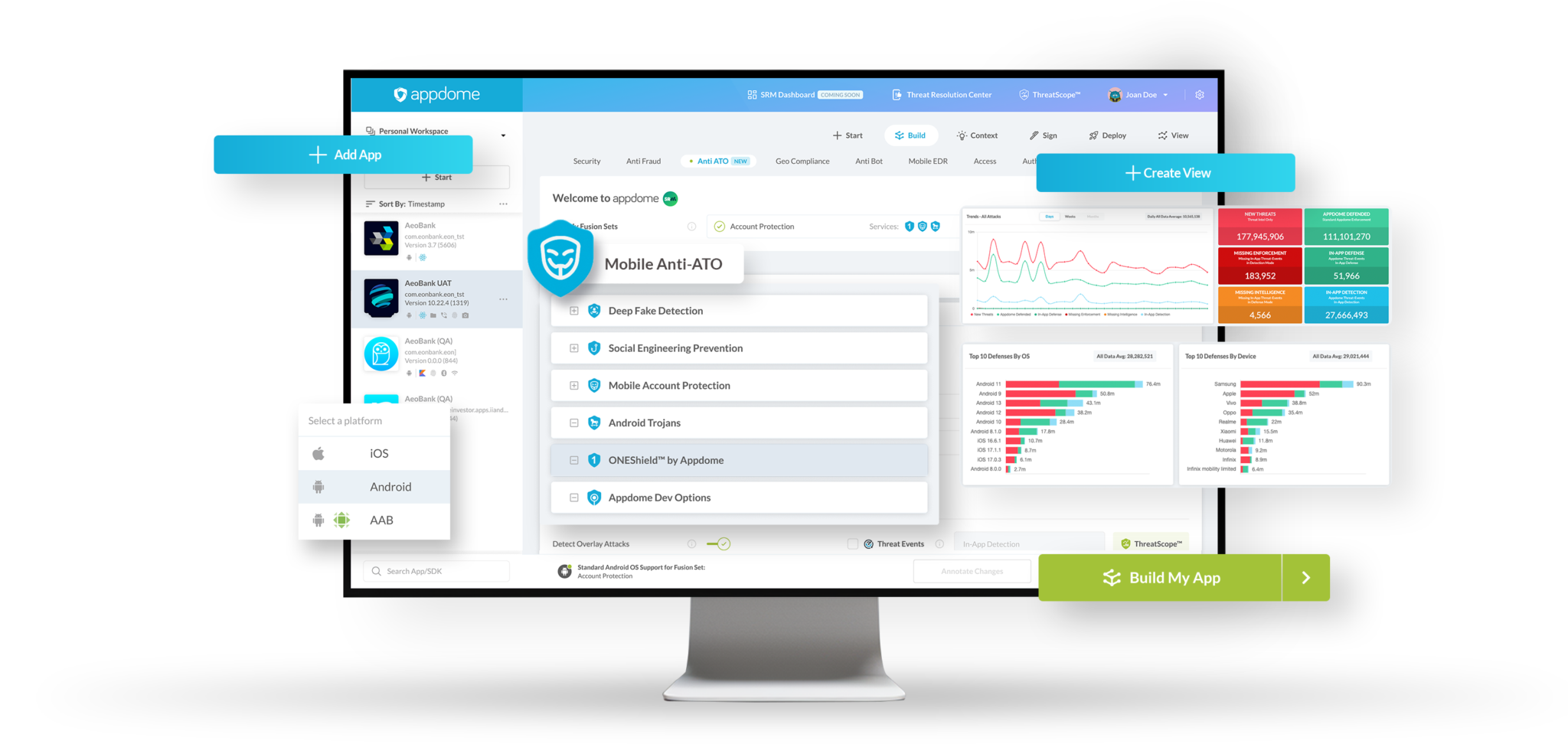
Appdome runs in your CI/CD pipeline to code, build, and maintain ATO prevention features in your Android & iOS apps. As your mobile app and its features change, Appdome's Build Agent - not your engineering team - will adjust the security features to match any application change or update.
Request Demo >
Appdome's Threat-Events™ framework provides account takeover (ATO) threat data to your app at any point in the mobile app lifecycle, from launch to sign-up to onboarding, payment, and more. Use the threat data to tailor threat response and deliver the best experience for your business.
Request Demo >
ThreatScope™ XTM monitors the active attack surface of your mobile business, providing real-time insights into the impact of mobile ATO defenses, deep inspection into new and emerging ATO attacks, and the power to preempt any ATO attack being used against your mobile app, brand, or user.
Request Demo >
We stopped mobile account takeovers cold - massive win for user trust and fraud prevention. Thanks, Appdome.”
CISO, Digital Banking
Appdome's modular architecture allows mobile brands and businesses to deploy any number of ATO prevention plugins inside mobile apps. These plugins use a dynamic defense model that analyzes behavioral anomalies, identifies threats, and filters out false positives, all without a server or external attestation. If you want to eliminate big Epics and manual work in fighting the battle against ATO attacks, Appdome is the right choice.
AI deepfakes are the largest ATO threat in the mobile economy. All facial recognition systems, from local (on-device) face recognition to commercial-grade identity verification services used in mobile apps, are vulnerable to deepfake attacks. Appdome's Deefake Detection creates a perimeter defense around facial recognition and other biometric authentication processes in Android & iOS apps. Appdome monitors for biometric spoofing, interceptions, and modifications in real time and either defends the app or passes detailed attack data to the app before the biometric process is called.
Learn More >
Called IDAnchor™, Appdome offers a one-of-a-kind ability to fingerprint the mobile device, mobile application install, and mobile application release that a user uses to allow mobile brands and businesses to bind mobile end user identifiers - such as userIDs, SessionIDs, TransactionIDs, Advertising IDs etc. - to immutable Android & iOS device, application, and installation identifiers. By binding each user to the full mobile application delivery chain, mobile brands and businesses can detect unauthorized or malicious logins, transactions or events from fraudsters on other mobile devices and locations.
Learn More >
The explosive growth of AI has made it easier for fraudsters to use social engineering, like IT Scams, to trick users into providing login credentials and relinquishing control of their mobile devices through Remote Desktop Control apps, Screen Sharing scams, and malicious MDM profiles. Once installed, the attackers can collect credentials, intercept SMS messages, and bypass biometric authentication, and perform Account Takeovers. Appdome detects when these and similar methods are in use inside an active Android or iOS session and either defends the app or passes threat data to the app for mitigation.
Learn More >
SIM swapping and other device tampering methods are used to impersonate the victim's device in an ATO attack. Without Appdome, if the attacker has the victim's SIM through the victim's carrier, there is nothing a mobile brand can do to detect the SIM swap. However, with Appdome, mobile brands, banks, and mCommerce applications can detect SIM swaps at the device level (without a carrier callout) and use a combination of behavioral, application, SIM, and device-level attributes to detect SIM changes in real-time. This gives brands an early warning signal to ATO attempts and ATO fraud.
Learn More >
ATO attacks commonly exploit mobile application memory or use memory dumping to extract Android & iOS user credentials, user IDs, session tokens, cookies, OTP data, and other sensitive data used to authenticate users. Appdome monitors mobile application memory for signs of malicious access, runtime harvesting, memory dumps, injection and other memory exploits. This protection includes Appdome's secure session management, allowing Appdome to clean up authentication data in memory after use, and prevent Clipboard Hijacking and Agentic AI Agent access to application authentication data.
Learn More >
Account takeovers are often enabled by mobile spyware on Android and iOS devices. Spyware can secretly monitor user activity, keystrokes, screenshots, network API requests, geolocation, and in-app behavior. Appdome detects all forms of Android and iOS spyware as they interact with the protected application, keeping everything in the app secure — from login and purchases to profile changes — and eliminating any advantage attackers gain from spyware. When spyware is detected, Appdome can defend the app or pass threat data to the application.
Learn More >
Remote Access Trojans (RATs) are used for account takeover (ATO) attacks by gaining stealth control of a device. RATs capture keystrokes, steal credentials, and monitor app activities, enabling attackers to bypass 2FA and take over accounts without user knowledge. Appdome ATO prevention detects and blocks RAT malware by preventing the malicious methods used by malware and trojans, such as keylogging, accessibility service abuse, overlays and more, preventing unauthorized remote access and control.
Learn More >
Appdome stops KYC fraud in mobile apps. KYC fraud is the gateway to account takeovers (ATOs). Once an attacker passes KYC checks, they gain trusted user status, enabling them to access financial services, onboard devices, or bypass fraud checks with minimal scrutiny. This trust can then be exploited to hijack real user accounts, withdraw funds, or move illicit assets—making KYC fraud a critical enabler of downstream ATO attacks. With Appdome, Android & iOS business can bring the power of KYC checks to any point in their application lifecycle.
Learn More >
Appdome's ThreatScope™ XTM combines the power of real-time ATO attack data from your mobile apps, AI-driven analytics, and no-code incident response in one platform. With ThreatScope, you know exactly what, when, where, and how an ATO attack was attempted, whether existing defenses worked to stop the attack, and what new defenses are needed to eliminate ATOs in your mobile business. Don't suffer from ATO attacks any longer. Choose ThreatScope and manage ATOs out of your business fast.
Learn More >
With Appdome Threat-Events™, mobile brands and developers can get rich threat data directly from the Appdome framework in the app, keep full control over the user experience, and enjoy multiple threat response options when ATO attacks occur. Threat-Events™ enables the app to plug into and control Appdome's ATO detection methods and threat data, and use the threat data to tailor in-app responses and mitigation workflows based on the specific ATO threat present in the application lifecycle.
Learn More >
Get a price quote and start saving money on mobile ATO prevention today. Appdome’s mobile ATO prevention solution helps mobile brands save $millions of dollars by avoiding unnecessary SDKs, server-side deployments, engineering work, support complexity, code changes and more.

Learn how to stop mobile app account takeovers in 2026. Block credential stuffing, mobile bots, emulators, and malware with persistent identity and real-time, in-app defenses.


Android bootloader integrity is often reduced to a locked or unlocked state. This article explains why that model fails and how contextual bootloader signals improve identity and session trust.
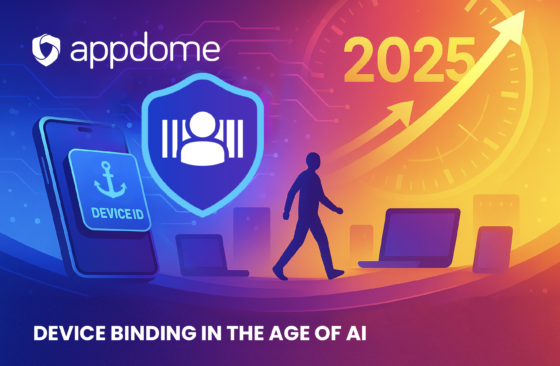
For years, fraud prevention solutions have tried to use Device IDs to bind (or link) a user’s account or session to a specific device to prevent unauthorized access from other devices. However, until recently, Device IDs lacked persistence and the broad threat context needed to stop fraud and ATOs …