






























What the SEC’s Indictment of a CISO Means for Mobile App Security
The Securities and Exchange Commission’s recent indictment of the SolarWinds CISO grabbed my attention. I had to write about it from a DevSecOps, or…
Use AI to build and maintain Mobile RASP and App Shielding in Android & iOS apps. Free your engineering team from the work it takes to secure, test, and support security in your Android & iOS apps.
Use AI to build and maintain Mobile App Security features in Android & iOS apps. In your CI/CD pipeline, Appdome automatically adapts and builds security features to match the language and structure of your mobile app, build by build. You enjoy less work, no coding, no SDKs, and better protection.
Get the Guide >
Use Appdome's Threat-Events™ framework to get mobile RASP security data at any point in your mobile application lifecycle, from launch to sign-up to onboarding, payment, and more. Then, use the threat data to tailor and control the user experience and deliver the best experience for your business.
Get the Guide >
ThreatScope™ XTM monitors the active attack surface of your mobile business, providing real-time insights into the impact of mobile RASP & app shielding defenses, deep inspection into new and emerging mobile RASP & app shielding threats, and the power to preempt any attack impacting your mobile app, brand, or user.
Get the Guide >
Appdome gave us real-time protection against runtime threats without slowing down development or app performance.”
Sr. iOS Engineer, Retail
Use Appdome’s Al-Native platform to secure, monitor, and respond with Mobile Runtime Application Self-Protection (RASP) and App Shielding features in your Android & iOS apps fast. Let Al code and build Certified Secure™ Mobile RASP & App Shielding, Obfuscation, Data Encryption, MitM attack prevention, and more into mobile apps. Don’t force more work, coding, outdated SDKs, and servers on the engineering team. Automate everything. Save Money.
Appdome's modular architecture allows mobile brands and businesses to deploy any number of RASP & App Shielding Detection plugins inside mobile apps. These plugins use a dynamic defense model that analyzes behavioral anomalies, identifies threats, and filters out false positives, all without a server or external attestation. If you want to eliminate big Epics and manual work in fighting the battle against mobile RASP & app shielding attacks, Appdome is the right choice.
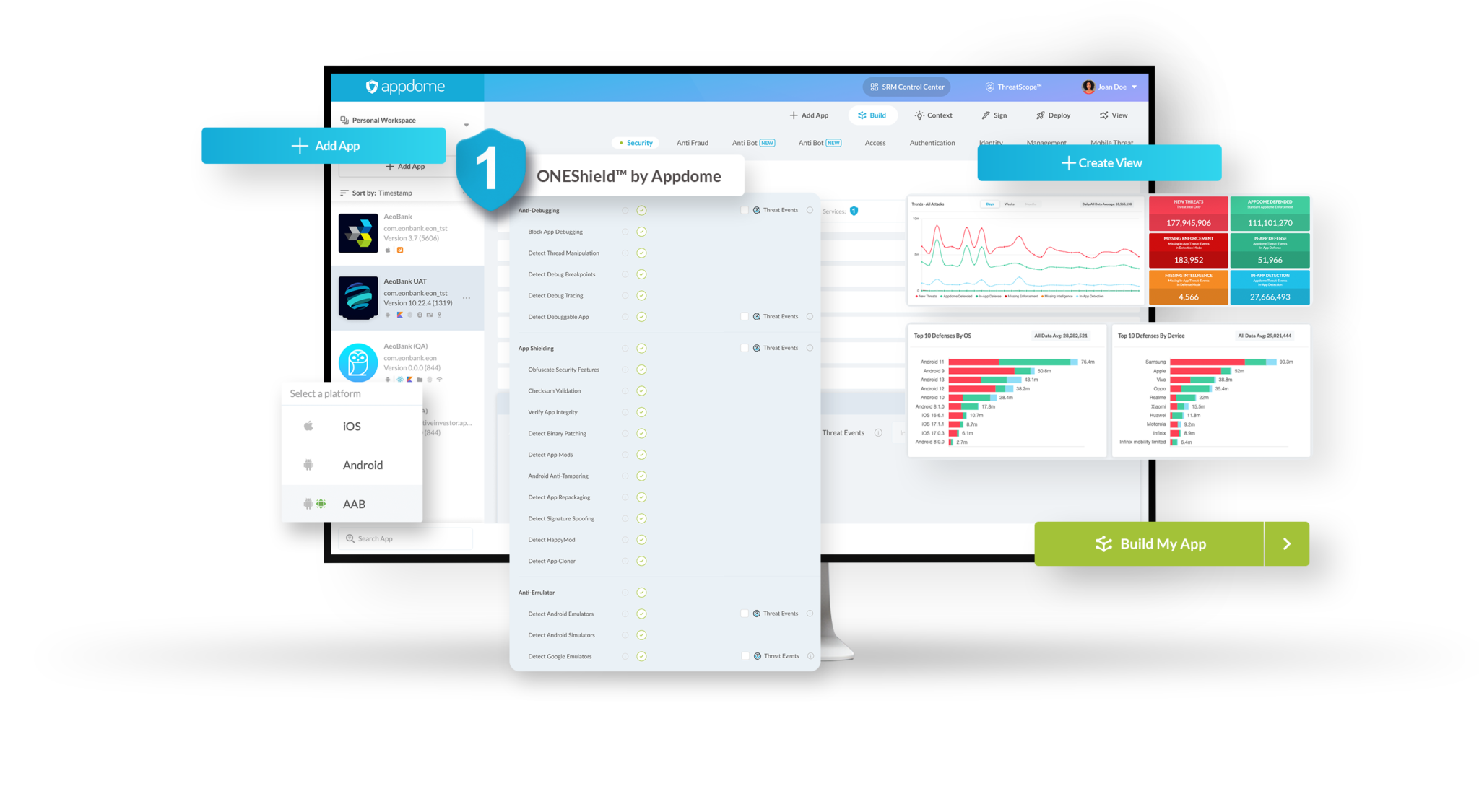
Anti-Tampering, Appdome's no-code, no-SDK anti-tampering defense in Android & iOS apps blocks attempts to tamper with, change, or modify apps. This includes method hooking, patching, loading libraries, changing workflows or logic. It also prevents re-packaging & re-distribution by malicious parties aiming to harvest user data with fake apps or spread malware via trojans. Appdome deploys security checks inside Android & iOS apps to detect patching, hooking, dependencies, shell code, and more at runtime, ensuring strong protection against unauthorized tampering.
Learn More >
Anti-Reverse Engineering, stops hackers from static, dynamic and runtime reverse-engineering, method tracing or graphing your mobile app and using tools like IDA Pro, Hopper, Cycript, Ghidra and others to learn how your app works, extract information and use the app's logic to create attacks and malware that target your app, users or network. Block reverse-engineering of mobile apps with the intent of learning how the app works. Block common reversing tools to pass mobile app penetration testing.
Learn More >
Anti-Debugging, Appdome' no-code, no SDK anti-debugging defense in Android and iOS apps prevents debugging tools from attaching, instrumenting or running the mobile app to safeguard against dynamic analysis, breakpoints and other methods to hack apps. Block native and Java debugging tools from attaching to your Android or iOS app. Leverage RASP and app shielding security features to block white hat and black hat debugging methods, including dynamic analysis tools like Apktool, Java Debugger (JDB), LLDB and more.
Learn More >
App Integrity & Checksum Validation, checks the Android & iOS app composition, data structure, data elements, and communication paths to validate the integrity and authenticity of the app. Calculates a unique fingerprint of information, binary data, and assets. By creating checksums, and validating them at run-time, Appdome prevents changes to your app, its resources, code, configuration, and more. Defends against all forms of patching and modifications to mobile apps.
Learn More >
Anti-Emulator, Appdome's no-code, no SDK anti-emulator defense stops hackers and pen testers from using simulators and emulators to launch apps, weaponize apps or instrument exploits. Prevent execution and running Android or iOS apps on emulators, simulators and other automated programs used in mobile fraud, mobile cheats and mobile hacking, dynamic instrumentation, memory inspection, and more, including Nox, BlueStacks, Memu and others.
Learn More >
Inside a highly demanding DevOps lifecycle, getting Mobile RASP Security and App Shielding right is extremely hard. Mobile apps are updated 24x-36x a year, the Android & iOS OS changes frequently, and threats evolve constantly. Appdome uses AI to eliminate this complexity, implement and keep each Mobile RASP and App Shielding defense up to date, and support the mobile engineering team's freedom and release cycles. Full support for the Mobile DevOps tool chain and best practices is a standard part of using Appdome.
Learn More >
With Appdome RASP and app shielding, mobile developers and brands can pass, resolve, and remediate findings in mobile pen tests and vulnerability assessments with ease. Make surprise findings and vulnerabilities in cybersecurity audits a thing of the past. Simplify your DevSecOps process, remove mobile app release blockers, and clear the pen test backlog in your CI/CD pipeline today. Appdome is the easiest way to guarantee that all mobile apps pass mobile app pen tests.
Learn More >
Appdome validates all Android & iOS defenses and provides Certified Secure™ DevSecOps Certification for all builds generated on its platform. This supports "shift left" strategies in the DevOps lifecycle and guarantees that each mobile app release includes Mobile RASP Security and App Shielding features needed by the business. Mobile brands can use Certified Secure™ in "go, no-go" decisions to eliminate roadblocks in the mobile app release cycle and to maintain a continuous record of compliance with internal and external requirements.
Learn More >
With Appdome, you can meet RASP & app shielding requirements without sacrificing your engineering freedom, development choices, other features, or the user experience.
Appdome uses AI to create and build RASP & app shielding defenses that work with the way you’ve built your app, including the coding languages and frameworks used in your Android & iOS apps. Appdome also supports your existing DevOps tech stack, including CI/CD, test automation, release management, and more.
Need to deliver RASP & app shielding features without a lot of work, crashing your app or slowing down your release cycle? We’ve got you covered.
Source: Appdome Annual State of Mobile App Security Review
Without RASP and mobile app shielding, hackers can easily use dynamic analysis, debugging and decompiling tools like IDA, Hopper, iRET, JD-GUI, JDB and others to reverse engineer your app, add malicious code, repackage and redistribute your app.

The Securities and Exchange Commission’s recent indictment of the SolarWinds CISO grabbed my attention. I had to write about it from a DevSecOps, or…

Learn the 3 reasons why Jailbreak and Root prevention remains a very important part in the overall protection of mobile banking apps.

Adding tampering protection to Android and iOS apps is one of the first lines of defense to prevent unauthorized changes to your app (such as ‘mods’ and ‘fakes’).
Prevent App…
Get a price quote and start saving money on mobile RASP Security and App Shielding today.
Appdome’s mobile RASP Security and App Shielding solution helps mobile brands save $millions of dollars by avoiding unnecessary SDKs, server-side deployments, engineering work, support complexity, code changes and more.