




























Defending Against Mobile App Account Takeovers (ATO) in 2026
Learn how to stop mobile app account takeovers in 2026. Block credential stuffing, mobile bots, emulators, and malware with persistent identity and real-time, in-app defenses.

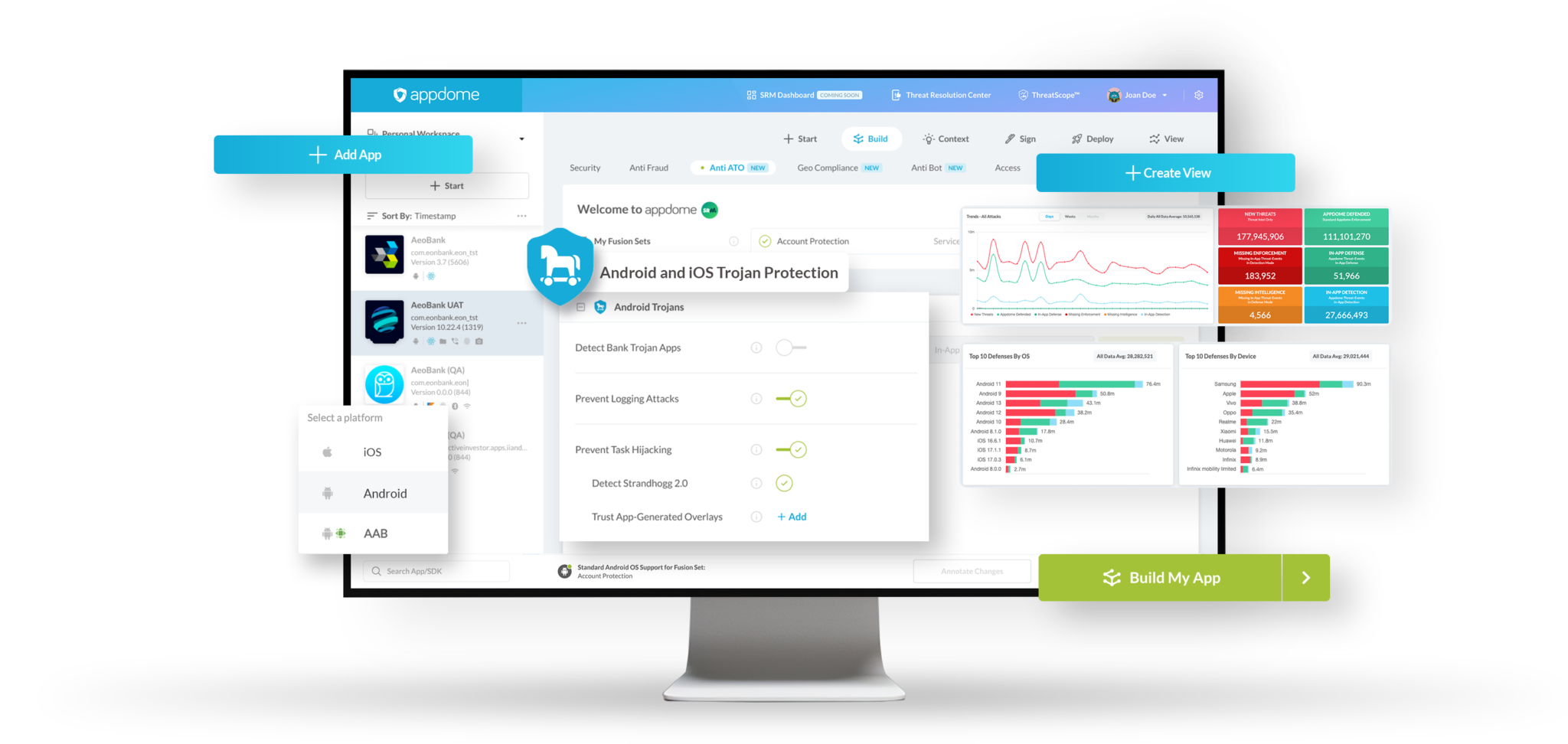
Appdome runs in your CI/CD pipeline to code, build, and maintain mobile trojan prevention features in your Android & iOS apps. As your mobile app and its features change, Appdome's Build Agent - not your engineering team - will adjust the security features to match any application change or update.
Get the Guide >
Use Appdome's Threat-Events™ framework to get Android & iOS Trojan threat data at any point in your mobile application lifecycle, from launch to sign-up to onboarding, payment, and more. Then, use the threat data to tailor and control the user experience and deliver the best experience for your business.
Get the Guide >
ThreatScope™ XTM monitors the active attack surface of your mobile business, providing real-time insights into the impact of Android & iOS Trojan Protection, deep inspection into new and emerging mobile Trojan threats, and the power to preempt any attack impacting your mobile app, brand, or user.
Get the Guide >
Trojans used to hide in plain sight. Appdome sees what others miss - on both platforms.”
Mobile Security Lead, Healthcare
Appdome uses AI and a modular architecture to bring efficiency and scale to the mobile Trojan prevention lifecycle. On one platform, mobile businesses build, monitor, and respond with 400+ mobile app security, anti-fraud, anti-ATO and anti-bot defense plugins in Android & iOS apps on demand. Each mobile Trojan prevention plugin automatically adjusts to the code of the app and uses a dynamic defense model that analyzes behavioral anomalies, identifies threats, and filters out false positives, all without a server or external attestation. If you want to eliminate big Epics and manual work, handoffs, and resolutions in your mobile trojan defense journey, Appdome is the right choice for you!
Android and iOS Trojans are malicious programs that abuse mobile app functionality, exploit vulnerabilities, and deceive users to steal data, take over accounts, or perform unauthorized transactions. Trojans such as BrasDex, Xenomorph, Panda, and Sharkbot use techniques like screen overlays, accessibility service abuse, keylogging, and screen recording to commit fraud and evade detection. Appdome’s dynamic Trojan protection plugins defend against these methods, providing continuous protection for mobile brands and users across diverse attack vectors.
Learn More >
Remote Access Trojans (RATs) are malicious tools that allow attackers to remotely control a mobile device, often without the user’s knowledge. They exploit vulnerabilities or disguise themselves as legitimate apps to infiltrate devices. Once active, they can monitor activity, steal data, capture credentials, manipulate files, and execute remote commands. Examples include AndroRAT, SpyNote, and CraxsRAT, which use techniques such as keylogging and screen recording. Appdome detects and blocks mobile RAT activity by identifying malicious behaviors and preventing unauthorized remote access to protect apps, users, and data.
Learn More >
Accessibility Service abuse attacks exploit Android Accessibility Services—features designed to assist users with disabilities, such as screen readers and alternative input methods—to spy on users, hijack sessions, steal credentials, and initiate fraudulent transactions without the user’s knowledge. Appdome’s accessibility service malware defense plugins detect suspicious accessibility permissions, block interception of accessibility events, and prevent abuse of accessibility services using advanced behavioral analysis.
Learn More >
Task hijacking and Strandhogg 2.0 are Android vulnerabilities that allow attackers to overlay malicious screens on legitimate apps and trick users into entering sensitive information such as credentials or payment details. Appdome’s dynamic **Detect Strandhogg 2.0** plugin protects against these attacks by securing task management, blocking malicious overlays, preventing exported activity hijacking, locking app activities in the foreground, and mitigating both Strandhogg 1.0 and 2.0 attack vectors.
Learn More >
Appdome's ThreatScope™ XTM combines the power of real-time trojan attack data from your mobile apps, AI-driven analytics, and no-code incident response in one platform. With ThreatScope, you know exactly what, when, where, and how a mobile Trojan attack was attempted, whether existing defenses worked to stop the attack, and what new defenses are needed to eliminate trojans in your mobile business. Don't suffer from mobile trojan attacks any longer. Choose ThreatScope and manage trojans out of your business fast.
Learn More >
Hackers often embed malicious programs, malware, trojans hidden inside widely used apps or malicious clones of social media, retail, and banking apps. They post these fake and trojan versions of the application on official or alternative app stores and trick users into downloading the fake app. Once on the device, the spyware may monitor user activity, record keystrokes, harvest data or perform full transactions on behalf it its unsuspecting users. These malware are often full fledged platforms for Identity Theft and Identity fraud in mobile apps.
Learn More >
Android Accessibility Services is designed to assist users with disabilities with features such as screen readers, magnification, and alternative input methods. Malware makers abuse this service for nefarious purposes such as Identity Theft, Identity Fraud, spying on mobile end users, hijacking transactions or initiating transactions, all without the user's knowledge or consent. Appdome's accessibility service malware defense detects ATS malware and offers mobile brands choices in how to inform and defend users targeted in these attacks.
Learn More >
Standard OS functions like screen sharing, screen recording, or screen mirroring cane used to carry our Identity theft, steal confidential data or spy on users in mobile apps. Detect spyware that records the screen, or abuses legitimate screen functions. Coverage includes zero day, unknown threats, and screen capture malware like StrandHogg and other variants. Appdome detects screen capture, screen sharing and screen mirroring applications and gives mobile brands choices on what and how to enforce the defenses.
Learn More >
With Appdome Threat-Events™, mobile brands and developers can get rich threat data directly from the Appdome framework in the app, keep full control over the user experience, and enjoy multiple threat response options when mobile trojans are detected. Threat-Events™ enables the app to plug into and control Appdome's Trojan prevention detection methods and threat data, and use the threat data to tailor in-app responses and mitigation workflows based on the specific trojan threats present in the application lifecycle.
Learn More >
Inside a highly demanding DevOps lifecycle, getting mobile trojan defense right is extremely hard. Mobile apps are updated 24x-36x a year, the Android & iOS OS changes frequently, and threats evolve constantly. Appdome uses AI to eliminate this complexity, implement and maintain each mobile trojan defense up to date, and support the mobile engineering team's autonomy and release cycles. Full support for the Mobile DevOps tool chain and best practices is a standard part of using Appdome.
Learn More >
Get a price quote and start saving money on mobile Trojan defense today. Appdome’s Android & iOS Trojan Protection solution helps mobile brands save $millions of dollars by avoiding unnecessary SDKs, server-side deployments, engineering work, support complexity, code changes and more.

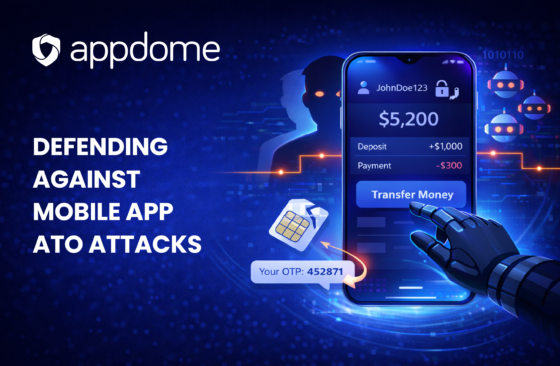
Learn how to stop mobile app account takeovers in 2026. Block credential stuffing, mobile bots, emulators, and malware with persistent identity and real-time, in-app defenses.


Android bootloader integrity is often reduced to a locked or unlocked state. This article explains why that model fails and how contextual bootloader signals improve identity and session trust.
For years, fraud prevention solutions have tried to use Device IDs to bind (or link) a user’s account or session to a specific device to prevent unauthorized access from other devices. However, until recently, Device IDs lacked persistence and the broad threat context needed to stop fraud and ATOs …