






























Mobile Code Obfuscation

Code Obfuscation
Without Complexity

Use AI to build and maintain Mobile Obfuscation in Android & iOS apps. In your CI/CD pipeline, Appdome automatically adapts and builds security features to match the language and structure of your mobile app, build by build. You enjoy less work, no coding, no SDKs, and better protection.

Code Obfuscation Persona

Mobile Code Obfuscation Made Easy
+Best
User Experience in the Industry

Use AI for Mobile Security
in Android & iOS Apps

Use AI to build and maintain Mobile App Security features in Android & iOS apps. In your CI/CD pipeline, Appdome automatically adapts and builds security features to match the language and structure of your mobile app, build by build. You enjoy less work, no coding, no SDKs, and better protection.

Get the Guide >

Use Code Obfuscation Defense
Threat Data in Your App

Use Appdome's Threat-Events™ framework to get mobile code obfuscation data at any point in your mobile application lifecycle, from launch to sign-up to onboarding, payment, and more. Then, use the threat data to tailor and control the user experience and deliver the best experience for your business.

Get the Guide >

Monitor & Preempt Security
Threats in Your Business

ThreatScope™ XTM monitors the active attack surface of your mobile business, providing real-time insights into the impact of code obfuscation defenses, deep inspection into new and emerging code obfuscation threats, and the power to preempt any attack impacting your mobile app, brand, or user.

Get the Guide >

Code obfuscation with Appdome is frictionless and powerful - protects our IP without complicating the build process.”

Mobile Code Obfuscation Cx

Automate the Work Out of
Mobile Code Obfuscation

Use Appdome’s AI-Native platform to secure, monitor, and respond with mobile code obfuscation features in your Android & iOS apps fast. Let AI code and build Certified Secure™ Mobile Code Obfuscation, RASP, Data Encryption, MitM attack prevention, and more into mobile apps. Don’t force more work, coding, outdated SDKs, and servers on the engineering team. Automate everything. Save Money.

You need More than One Defense to
Stop Mobile Code Obfuscation Attacks

Appdome's modular architecture allows mobile brands and businesses to deploy any number of Code Obfuscation Detection plugins inside mobile apps. These plugins use a dynamic defense model that analyzes behavioral anomalies, identifies threats, and filters out false positives, all without a server or external attestation. If you want to eliminate big Epics and manual work in fighting the battle against mobile code obfuscation attacks, Appdome is the right choice.

Easier iOS Obfuscation

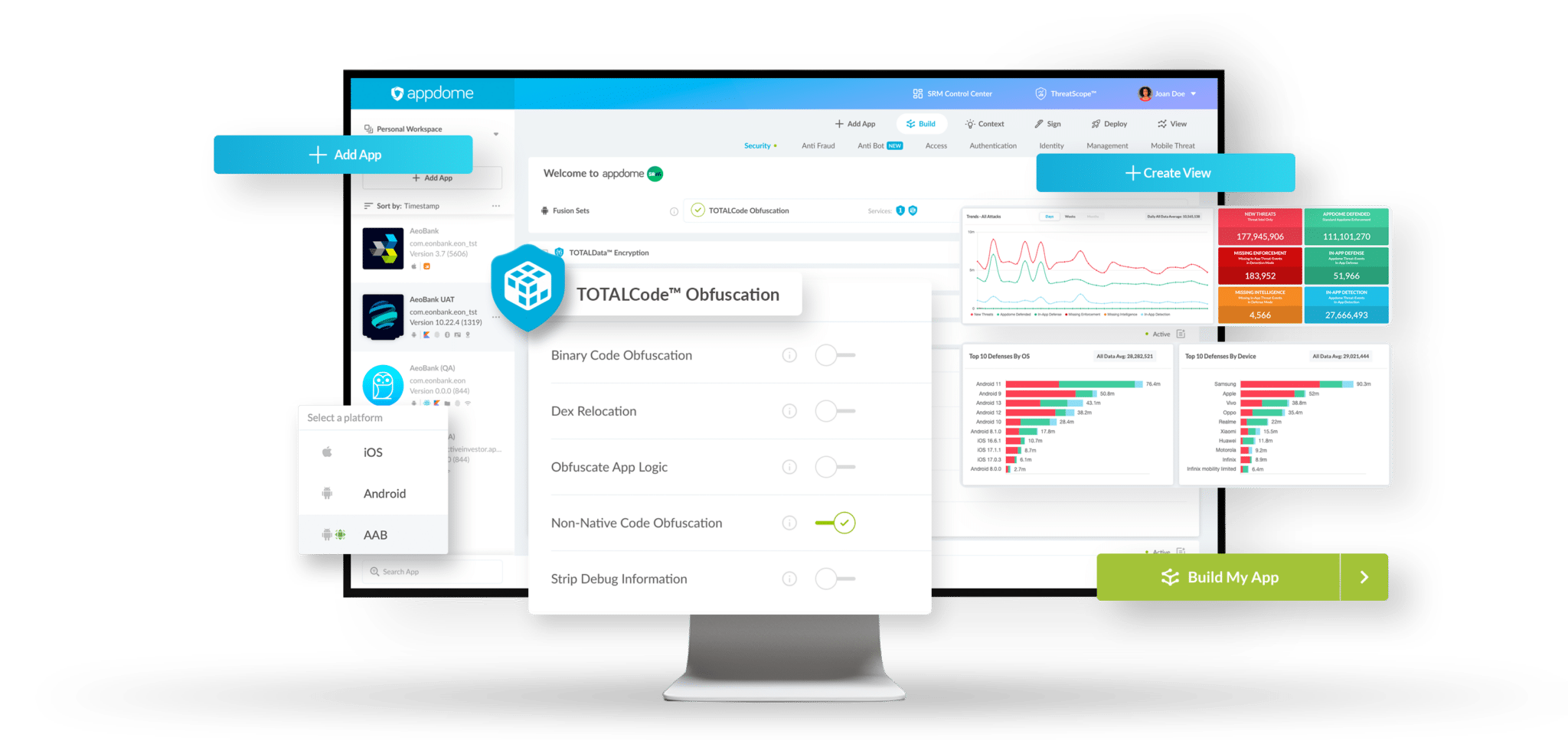
Appdome's TOTALCode™ Obfuscation solution for iOS offers mobile brands a quick and easier way to achieve iOS obfuscation. Leverage machine learning and automation to obfuscate iOS mobile apps built in any language, including Objective-C (Obj-C), Swift, JavaScript (JS), React Native, Unity, Cordova, Xamarin, C, C++ and more. Appdome automatically adjust the obfuscation to accommodate any change in the iOS app, its binary, business logic, class names, dynamic classes, methods, SelRef, JS, DLL, code and control flows, symbols and more in the DevOps CI/CD pipeline. There's no SDKs, and no exclusion rules to manage manually.

Learn More >

Easier Android Obfuscation

Appdome's TOTALCode™ Obfuscation solution for Android offers mobile brands a quick and easier way to achieve Android obfuscation. Leverage machine learning and automation to obfuscate Android mobile apps built in any language, including Java, Kotlin, Flutter, JavaScript (JS), React Native, Unity, Cordova, Xamarin, C, C++ and more. Appdome automatically adjust the obfuscation to accommodate any change in the Android app, its binary, business logic, package names, class names, dynamic classes, methods, linkages, reflections, JS, DLL, DEX code flows and more in the DevOps CI/CD pipeline. No SDKs, no exclusion rules.

Learn More >

Obfuscate Dynamic Classes

Appdome is the only obfuscation vendor capable of obfuscating dynamic classes, such as reflections and libraries that generate new classes, methods, or bytecode instructions on-the-fly. With Appdome, Dynamic Classes can be loaded and executed correctly and developers will maintain full control over runtime inspection and manipulations of class metadata, fields, methods, and constructors without errors. Dynamic classes are generated at runtime in the app. Legacy obfuscation techniques can't obfuscate dynamic classes because they operate on static classes that are hard-coded and known at compile time only.

Learn More >

Kotlin Code Obfuscation

Appdome TOTALCode™ Obfuscation solution is purpose built to handle highly dynamic coding frameworks like Kotlin. Obfuscating Kotlin mobile apps requires specialized techniques for Kotlin-specific language features, reflection, DSLs, interoperability with Java, coroutines, and functional programming constructs. With Appdome, developers can continue to inspect and manipulate class metadata at runtime, without breaking reflection-based functionality. Appdome's Kotlin obfuscation preserves reflection metadata and ensures that obfuscated classes remain compatible with reflection-based APIs at all times.

Learn More >

Obfuscate Binary Extensions

Appdome is the only obfuscation vendor capable of obfuscating binary code file extensions in React Native, Xamarin and other frameworks like .exe, .dll, .dll.config, .blob, .jsbundle, .js and .html files. This protection prevents an attacker from reading of your app’s contents, even after extracting the app’s files. Binary extension files lack symbolic data, such as variable names, function names, and class names, which are needed in legacy source code obfuscation. Legacy obfuscation tools can't identify and rename meaningful elements within the binary file, leaving a majority of the code exposed and making it easier for attackers to reverse engineer your application.

Learn More >

Unity Code Obfuscation

Appdome TOTALCode™ Obfuscation solution is purpose built to handle highly dynamic coding frameworks like Unity. Unity supports several scripting languages, including C#, JavaScript, and Boo. Each of these languages has its own syntax and features, which can complicate the obfuscation process. Appdome's obfuscation for Unity works seamlessly with Unity scripting languages and understands their respective constructs to effectively obfuscate Unity code. Obfuscation includes Unity global-metadata.dat file which contains Unity symbols and is critical for reverse engineering the Unity code and logic.

Learn More >

Comprehensive Mobile App Security

With the Appdome platform, you use automation to build, test, release, and monitor mobile app security features in Android & iOS apps from inside your DevOps CI/CD pipeline. Deliver Runtime Application Self-Protection (RASP), Code Obfuscation, Mobile Data Encryption, Jailbreak & Root Detection, Man-in-the-Middle Attack Prevention, and other mobile app security features in Android & iOS apps without any burden on the mobile engineering team. Certify DevSecOps compliance, prevent reverse engineering and pass penetration tests with ease. All CI/CD pipelines supported. No code, No SDKs, and No servers required.

Learn More >

Mobile RASP Security

With ONEShield™, mobile brands automate the work out of delivering runtime application self-protection (RASP) security features to harden Android & iOS apps in the CI/CD pipeline. Prevent reverse engineering, mobile app tampering, fake apps, trojan apps, malicious modifications, hacking, simulators, emulators, and debugging attacks with ease. Stop hackers and pen testers from using decompiling, disassembly tools, or re-packaging, re-signing versions of Android & iOS apps to build and launch attacks. No SDKs. No Coding. No Engineering Work Needed.

Learn More >

Pass Mobile Penetration Tests

With Appdome Code Obfuscation Solution, mobile developers and brands can pass, resolve, and remediate findings in mobile penetration tests and vulnerability assessments with ease. Make surprise findings and vulnerabilities in cybersecurity audits a thing of the past. Simplify your DevSecOps process, remove mobile app release blockers, and clear the pen test backlog in your CI/CD pipeline today. Appdome is the easiest way to guarantee that all mobile apps pass mobile app penetration tests.

Learn More >

Integrated DevSecOps Compliance

Appdome validates all Android & iOS defenses and provides Certified Secure™ DevSecOps Certification for all builds generated on its platform. This supports "shift left" strategies in the DevOps lifecycle and guarantees that each mobile app release includes mobile code obfuscation features needed by the business. Mobile brands can use Certified Secure™ in "go, no-go" decisions to eliminate roadblocks in the mobile app release cycle and to maintain a continuous record of compliance with internal and external requirements.

Learn More >

Mobile Code Obfuscation

Are you an Android or iOS Developer?

Meet Code Obfuscation Requirements the Right Way.​

With Appdome, you can meet code obfuscation requirements without sacrificing your engineering freedom, development choices, other features, or the user experience. 

Appdome uses AI to create and build code obfuscation defenses that work with the way you’ve built your app, including the coding languages and frameworks used in your Android & iOS apps. Appdome also supports your existing DevOps tech stack, including CI/CD, test automation, release management, and more.

Need to deliver code obfuscation features without a lot of work, crashing your app or slowing down your release cycle? We’ve got you covered.

Ready to Save $Millions on Mobile Code Obfuscation?

Get a price quote and start saving money on mobile code obfuscation today. Appdome’s mobile code obfuscation solution helps mobile brands save $millions of dollars by avoiding unnecessary SDKs, server-side deployments, engineering work, support complexity, code changes and more.

Search Appdome Solutions

Search
Image Blog 2 Text

Device Binding in the Age of AI

For years, fraud prevention solutions have tried to use Device IDs to bind (or link) a user’s account or session to a specific device to prevent unauthorized access from other devices. However, until recently, Device IDs lacked persistence and the broad threat context needed to stop fraud and ATOs …